Variants
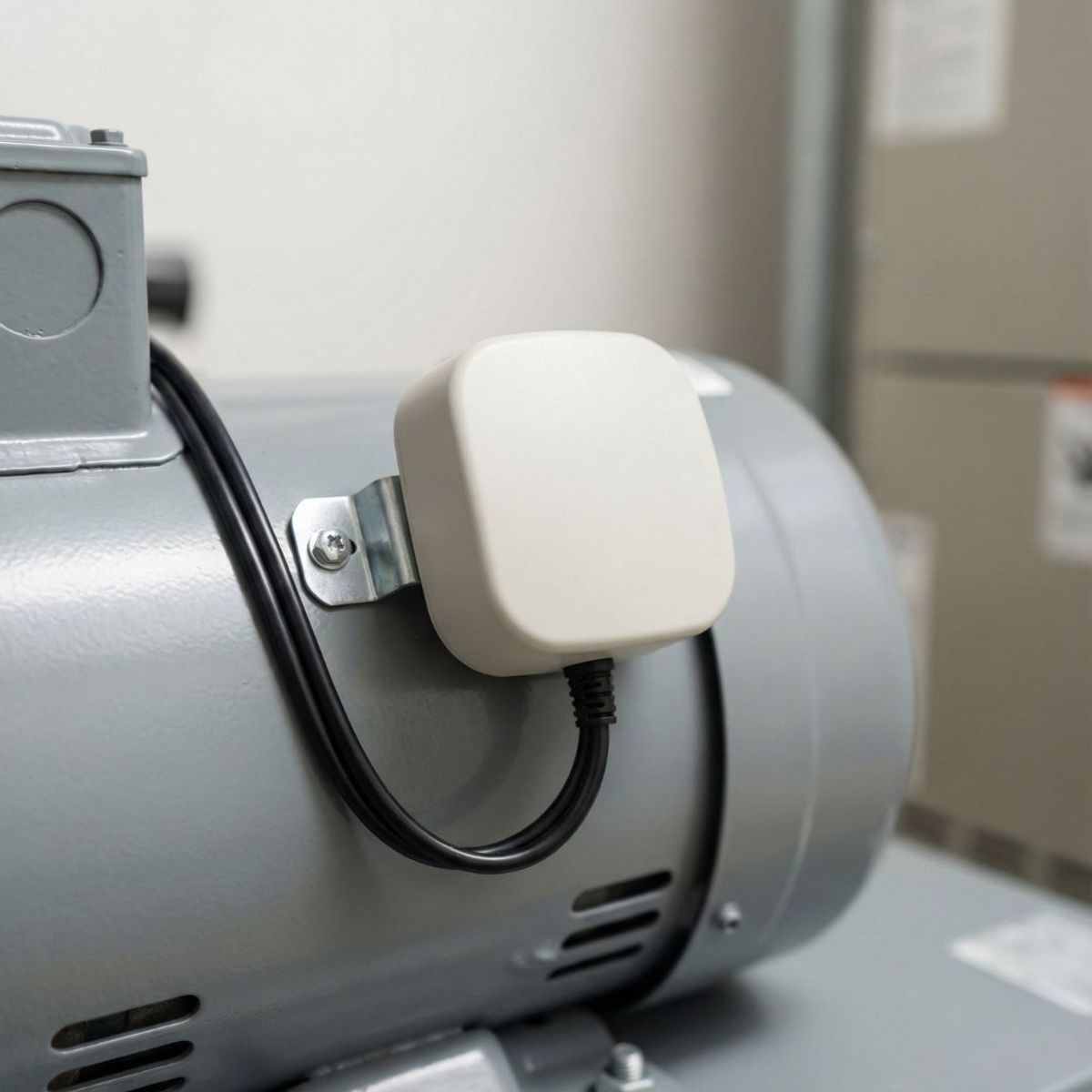
Equipment-mounted accelerometer sensors attach directly to compressor housings, motor casings, or fan assemblies using industrial adhesive or magnetic mounts.
Baseline establishment during initial deployment captures normal vibration patterns for each piece of equipment, creating a reference profile against which future changes are measured.
Continuous monitoring mode tracks vibration intensity and frequency patterns over time, building trend data that reveals gradual degradation invisible to periodic manual inspections.
Why It Matters
Mechanical equipment fails predictably — bearing wear, shaft misalignment, and refrigerant issues all produce characteristic vibration changes before they cause outright failure. Catching these early signals prevents costly emergency repairs and the food loss that comes with unexpected equipment downtime.
Traditional maintenance schedules service equipment on fixed intervals regardless of condition. Vibration monitoring enables condition-based maintenance — servicing equipment when data shows it actually needs attention, avoiding both premature maintenance and unexpected failures.
When combined with energy and temperature data, vibration monitoring completes the equipment health picture. A compressor showing increased vibration, rising energy draw, and declining temperature performance tells a clear story that helps technicians arrive prepared with the right parts and plan.
Use Cases
Compressor health monitoring — detect bearing wear, refrigerant issues, and mechanical degradation in walk-in and reach-in compressors before they fail.
Motor and fan monitoring — track vibration patterns in HVAC blowers, exhaust fans, and ice machine motors to identify developing problems.
Predictive maintenance prioritization — use vibration trend data to schedule maintenance based on actual equipment condition rather than fixed calendars.
Limitations
Vibration monitoring typically requires a baseline period to establish normal operating patterns for each piece of equipment. Alerts become most accurate after the system has learned what "normal" looks like for a specific compressor or motor.
Stable, direct mounting on the equipment housing is essential for accurate readings. Sensors mounted on vibration-dampened surfaces, flexible connections, or shared structures may pick up interference from adjacent equipment.