Variants
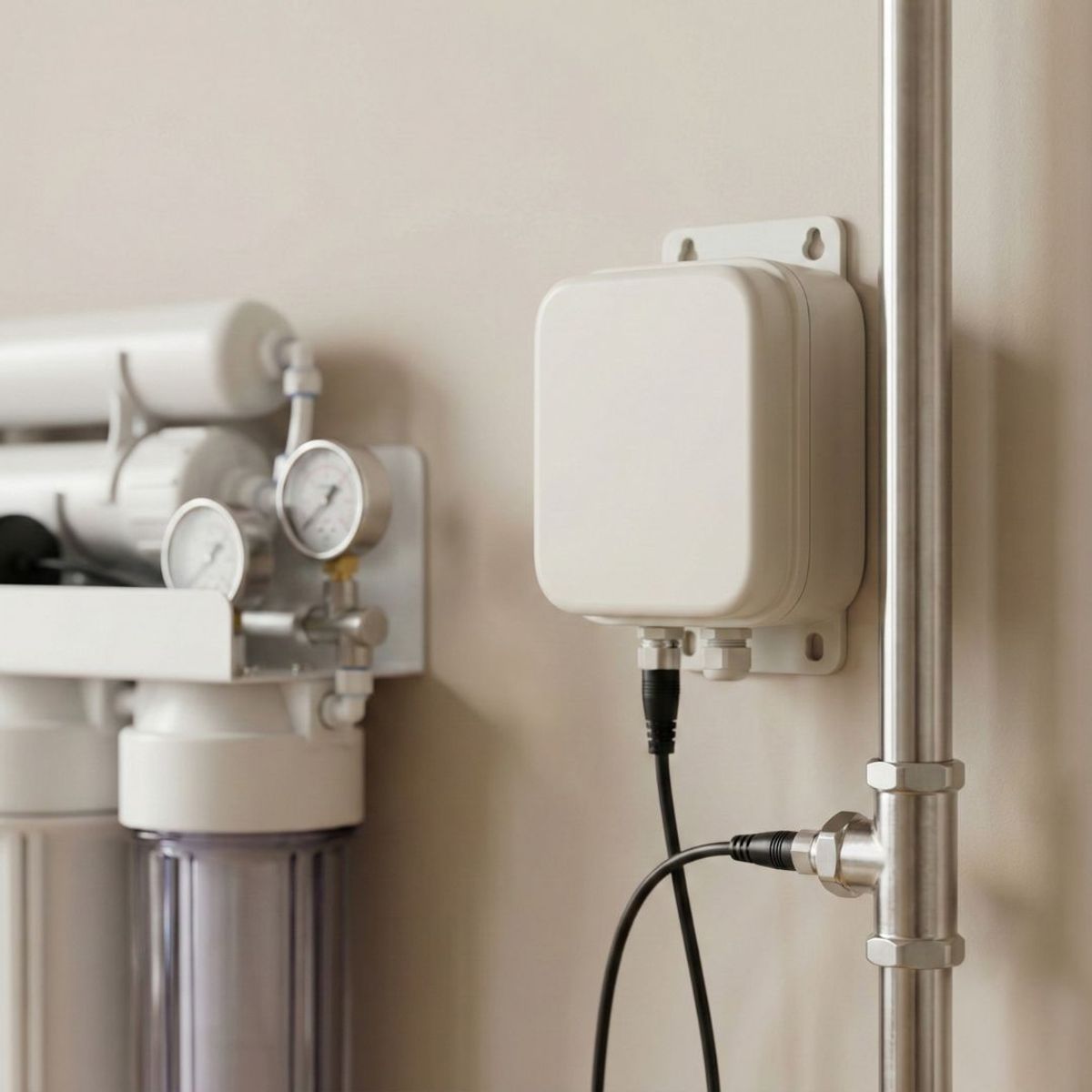
Probe-based conductivity sensors measure total dissolved solids (TDS) by detecting electrical conductivity in water, providing a reliable indicator of filtration performance and mineral content.
Inline configurations install directly in water lines for continuous, real-time monitoring without requiring manual sampling or testing.
Sampling configurations use bypass loops or tap connections for periodic measurement in locations where inline installation isn't practical, still providing automated data collection without manual effort.
Why It Matters
Water quality directly impacts equipment lifespan, beverage taste, and food safety. Hard water causes scale buildup that degrades ice machines, espresso machines, steamers, and combi ovens — often invisibly until equipment fails or repair bills arrive.
Reverse osmosis and filtration systems degrade gradually. TDS monitoring tracks filtration performance over time, showing exactly when filters need replacement rather than relying on calendar-based schedules that either waste money (changing too early) or risk quality (changing too late).
For beverage-heavy operations, consistent water quality is essential for product consistency. Coffee shops, breweries, and restaurants that depend on water quality can verify that their filtration is performing to spec every day, not just when they remember to test.
Use Cases
RO system monitoring — track TDS levels before and after reverse osmosis filtration to verify membrane performance and predict replacement timing.
Hard water monitoring — detect rising mineral content that signals scaling risk to ice machines, steamers, espresso machines, and other water-dependent equipment.
Filtration performance tracking — monitor filter effectiveness over time and receive alerts when output quality degrades beyond acceptable thresholds.
Limitations
Conductivity-based sensors measure total dissolved solids as a general water quality indicator. They do not identify specific contaminants, bacteria, or chemical compounds — comprehensive water safety testing still requires laboratory analysis.
Probe calibration and cleaning may be needed periodically, especially in high-mineral or high-sediment water supplies. Sensor accuracy can drift over time without maintenance, so periodic validation against lab results is recommended.