Variants
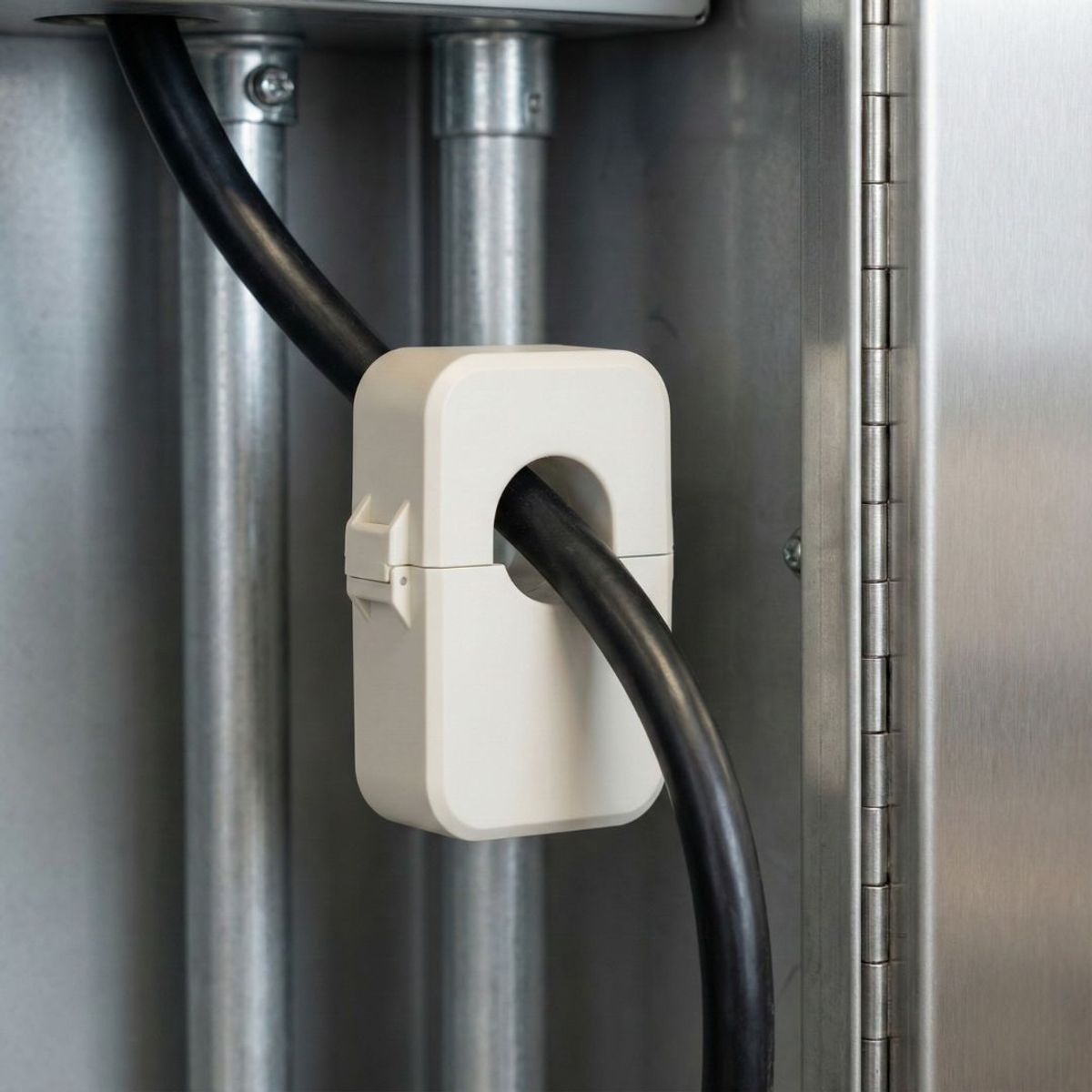
Clamp-based current transformers (CTs) wrap around existing electrical wires without cutting or interrupting circuits, enabling non-invasive installation on most commercial equipment.
Single-circuit monitoring tracks individual pieces of equipment — a specific walk-in compressor, ice machine, or HVAC unit — providing granular visibility into each asset's energy profile.
Multi-circuit and panel-level deployments monitor entire electrical panels at once, giving a facility-wide energy overview without needing individual sensors on every piece of equipment.
Why It Matters
Equipment doesn't fail all at once — it degrades gradually. Rising energy draw is often the earliest detectable sign that a compressor is straining, a motor bearing is wearing, or a coil is freezing over. Catching these signals early prevents costly emergency repairs.
Most multi-location operators have no visibility into equipment-level energy use. Simple monitoring typically reveals 15–25% energy waste from aging equipment, poor maintenance timing, or units running when they shouldn't be.
Energy data provides objective evidence for maintenance prioritization, equipment replacement decisions, and utility cost management across a portfolio of locations.
Use Cases
Equipment health monitoring — track power draw trends to detect compressor strain, motor degradation, or refrigerant issues before they cause failures.
Energy waste identification — find equipment running inefficiently, cycling abnormally, or consuming power during off-hours when it should be idle.
Predictive maintenance signals — combine energy data with temperature readings to build a complete picture of equipment health and predict service needs.
Utility cost management — benchmark energy consumption across locations and identify outliers that need attention.
Limitations
Installation requires access to electrical panels or wiring, which may need coordination with facility management. While no electrician is needed for clamp-on CTs, basic electrical safety practices must be followed.
Energy monitoring measures current draw and estimates power consumption — it does not diagnose specific mechanical problems. Anomalies flag that something has changed, but a technician determines the root cause.