Variants
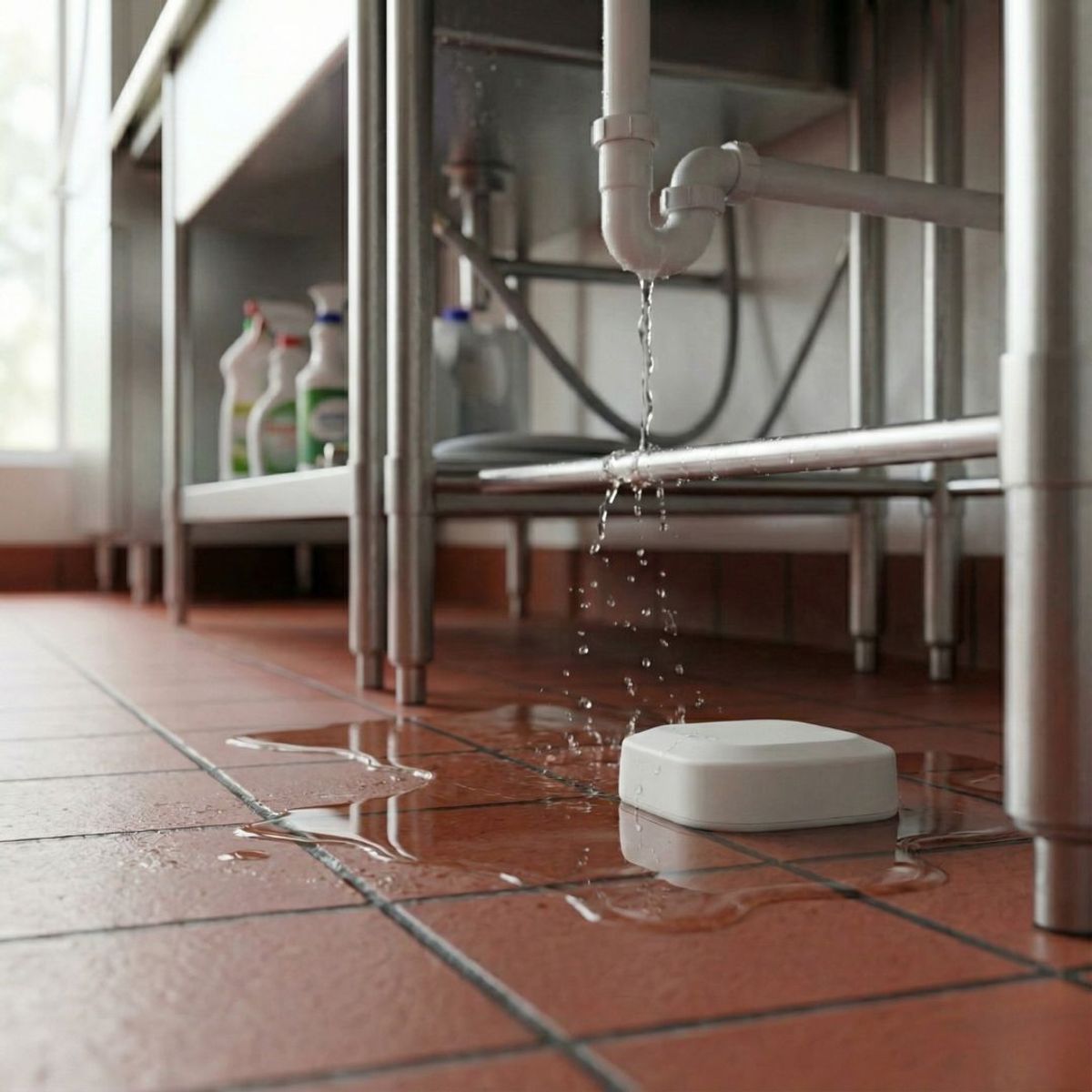
Spot detection sensors monitor a specific point — placed directly under equipment, at drain locations, or at the lowest point where water would collect first.
Rope or cable-style sensors extend detection across a wider area, running along walls, under equipment banks, or around the perimeter of mechanical rooms to catch leaks from any source.
Under-equipment and floor-mounted deployments use low-profile housings that fit in tight spaces beneath dishwashers, ice machines, water heaters, and refrigeration units.
Why It Matters
Water damage from undetected leaks is one of the most expensive and disruptive facility issues in foodservice. A single overnight leak from a failed supply line can cause tens of thousands of dollars in damage to floors, walls, equipment, and inventory.
Early detection is everything. A leak caught in the first few minutes is a mop-up — the same leak running for hours becomes a construction project. Instant alerts enable rapid response that prevents minor drips from becoming major incidents.
Documented leak monitoring supports insurance claims, demonstrates proactive facility management, and helps identify recurring plumbing issues that need permanent fixes rather than repeated emergency repairs.
Use Cases
Equipment protection — detect leaks from dishwashers, ice machines, water heaters, and refrigeration condensate lines before they cause floor or equipment damage.
Facility protection — monitor mechanical rooms, restrooms, and areas with plumbing runs for early signs of pipe failures or fitting leaks.
After-hours monitoring — catch leaks that start overnight or during closed hours when nobody is on-site to notice water accumulation.
Preventative maintenance — track leak frequency and location patterns to identify aging plumbing or equipment that needs proactive replacement.
Limitations
Leak presence sensors detect the presence of liquid at the sensor location — they do not measure flow rate, identify the source of the leak, or detect moisture in walls or ceilings above the sensor.
Sensor placement determines detection speed. Water must reach the sensor to trigger an alert, so positioning at the lowest point or most likely collection area is critical for fast response.