Temperature
Continuous temperature monitoring for food safety, operations, and compliance.
Variants
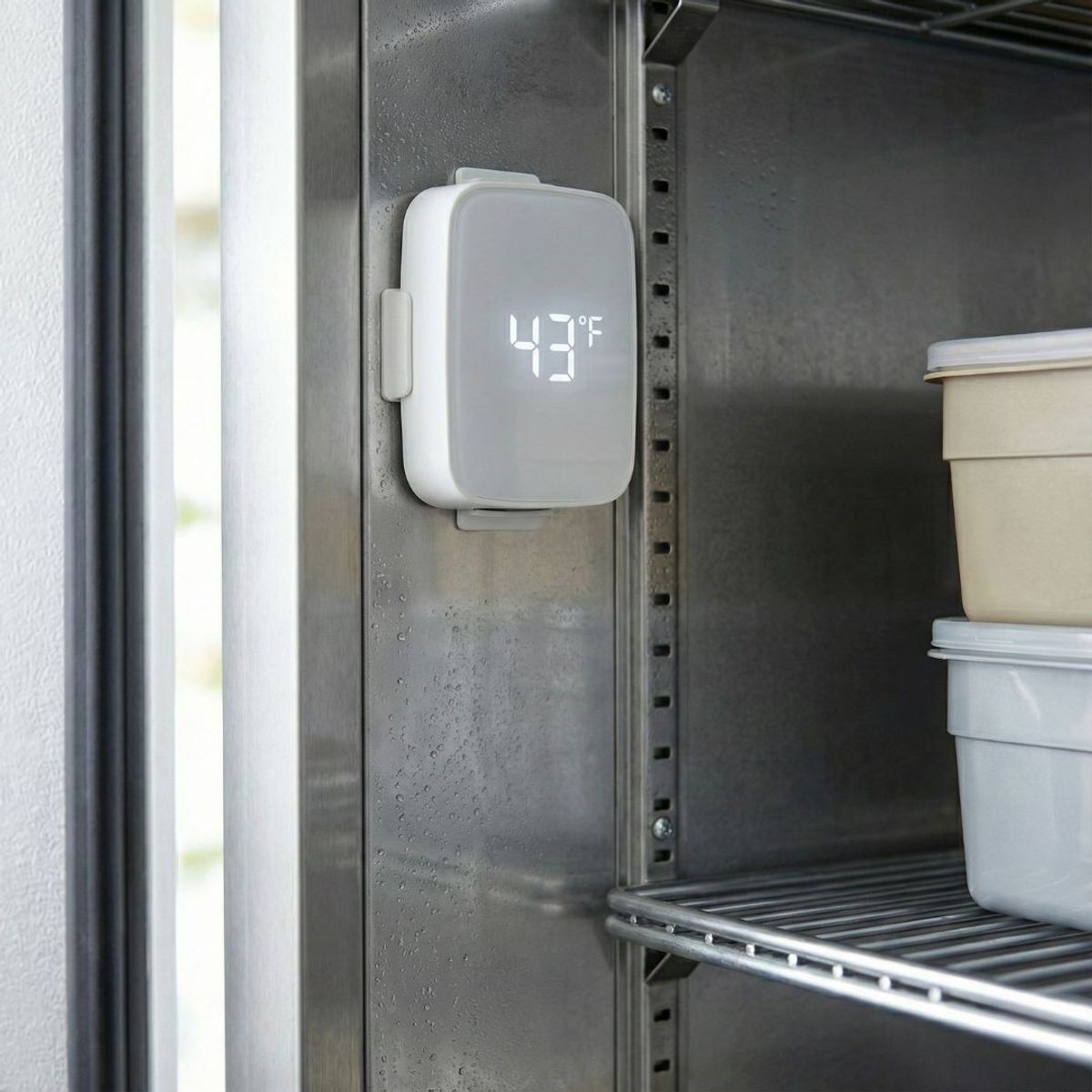
Ambient temperature sensors monitor the air temperature inside coolers, freezers, kitchens, and storage areas — the most common deployment for general food safety and compliance monitoring.
External product probes connect to the sensor unit via a wired probe that sits directly in food product or liquid, measuring actual product temperature rather than surrounding air temperature for more accurate safety readings.
Glycol-buffered sensors use a sealed vial of glycol or thermal beads to simulate the thermal mass of food, reducing false alarms from door openings and defrost cycles while maintaining audit-ready accuracy.
Specialized deployments include high-temperature sensors rated for hot holding and cooking areas, low-temperature sensors rated for deep freezers down to -40°F, and ruggedized industrial housings for harsh environments.
Why It Matters
Temperature monitoring is the foundation of food safety compliance. HACCP plans, health department inspections, and FDA guidelines all require documented proof that food is stored, prepared, and held at safe temperatures.
Manual temperature logging is time-consuming, error-prone, and often happens at scheduled intervals that miss critical events. Automated monitoring checks temperatures continuously — every few minutes, 24/7 — catching excursions that manual checks would miss.
Beyond compliance, temperature data prevents food waste by catching failing equipment early. A freezer that's slowly losing cooling capacity shows up as a gradual temperature trend long before product is actually compromised.
Use Cases
Continuous temperature logging — replace manual temp logs with automated, continuous monitoring across all refrigeration, freezer, and hot holding equipment.
Cool down monitoring — track two-stage cool down processes to ensure food moves through the danger zone within FDA time limits, with automatic alerts if cooling stalls.
Cold chain documentation — create an unbroken temperature record from receiving through storage, proving compliance at every stage.
Exception alerting — receive instant notifications when temperatures move outside safe ranges, enabling rapid corrective action before product is compromised.
Equipment health trending — identify refrigeration units that are working harder to maintain temperature, signaling maintenance needs before failure.
Limitations
Sensor selection matters — ambient air sensors, product probes, and buffered sensors each serve different purposes. Ambient sensors react quickly to air temperature changes (including door openings), while buffered sensors better represent actual food temperature but respond more slowly.
Placement within equipment affects readings significantly. Sensors near doors, fans, or defrost heaters may show different temperatures than sensors placed in the center of stored product. Installation placement is determined based on the specific compliance and monitoring goals.