Distance / Level
Fill and level monitoring for ice machines, grease traps, bins, and tanks.
Variants
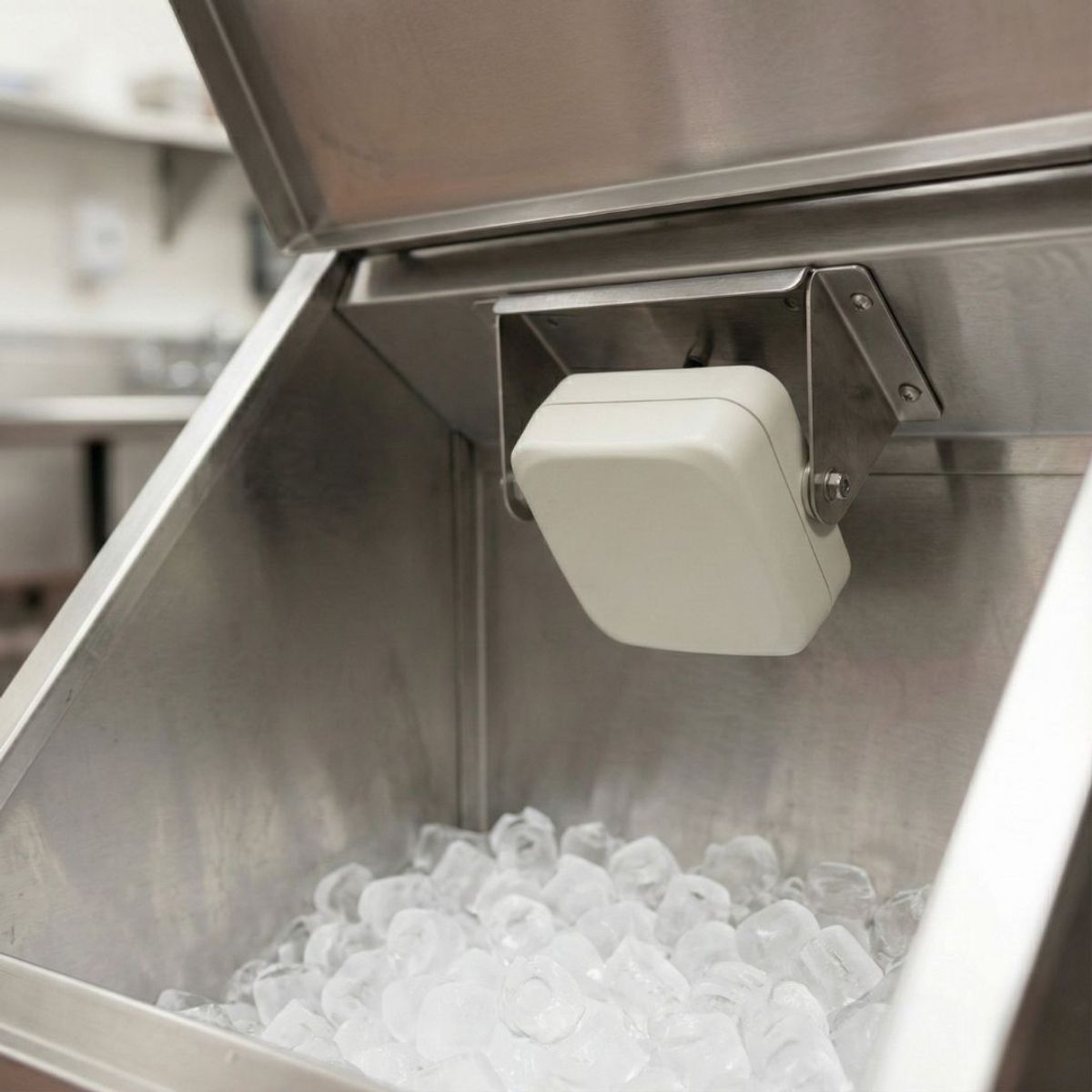
Ultrasonic distance sensors measure fill levels by bouncing sound waves off the surface of contents. Common deployments include ice machine bins, grease traps, dumpsters, and open-top containers.
Time-of-flight (ToF) sensors use infrared light pulses for higher precision in enclosed or narrow containers like grease interceptors, chemical tanks, and ingredient bins.
Overhead mounting configurations measure from the top down into bins and tanks, while wall-mounted options track lateral distance for position or proximity applications. Both indoor and outdoor-rated housings are available.
Why It Matters
Ice machines, grease traps, and waste containers all share the same problem — they get serviced on fixed schedules instead of actual need. Level monitoring enables demand-based servicing that eliminates unnecessary trips and prevents overflows.
A grease trap that overflows creates health code violations and costly emergency cleanups. An ice machine that runs empty during a weekend rush loses sales. Real-time fill data prevents both scenarios by alerting staff before levels hit critical thresholds.
Historical fill trends reveal consumption patterns that inform better planning — how fast ice depletes during peak hours, which locations generate the most grease, and when dumpsters actually need pickup versus when haulers show up by default.
Use Cases
Ice machine monitoring — track ice bin levels to prevent run-outs during peak service, schedule maintenance based on production patterns, and detect machines that aren't producing at expected rates.
Grease trap management — monitor fill levels in grease traps and interceptors to schedule pumping based on actual accumulation, avoiding both overflows and unnecessary service visits.
Waste and recycling — know exactly when dumpsters and indoor bins need servicing, eliminating unnecessary hauls and overflow fees while keeping facilities clean.
Ingredient and supply monitoring — detect low stock levels in bulk ingredient bins, soap dispensers, or supply containers and trigger replenishment alerts before staff run out.
Tank level monitoring — measure liquid levels in water tanks, chemical storage, or cleaning solution containers to maintain adequate supply.
Limitations
Measurement accuracy depends on mounting angle, distance to target, and surface characteristics. Liquids like grease and water provide consistent readings, while loose solids like ice can produce some variation as surface shape changes.
Outdoor deployments can be affected by temperature extremes, rain, snow accumulation on the sensor face, or wind-blown debris. Indoor deployments near steam or high-heat equipment may need appropriate sensor housing selection.