FDA Food Code Temperature Chart: Every Number Your Kitchen Needs
Scannable FDA Food Code 2022 temperature chart: hot and cold holding, minimum cooking temps, two-stage cooling, reheating, and receiving requirements.
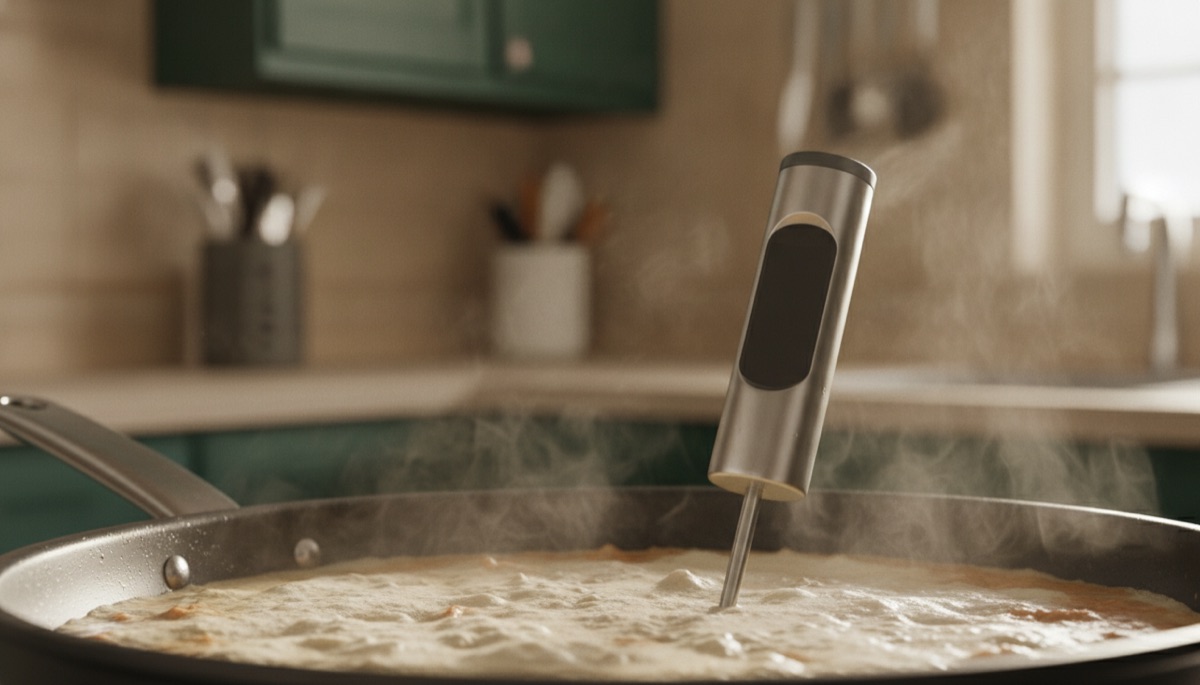
Every temperature number your kitchen is judged on, in one place — sourced from the FDA Food Code 2022 and its official summary charts. Bookmark it, print it, tape it to the office wall.
One caveat before the numbers: the FDA Food Code is a model code. Nearly every state adopts it, but some adopt older editions or amend specifics, so confirm with your local health department if a number is load-bearing for your operation.
Holding temperatures
- Cold holding: 41°F (5°C) or below — all TCS food, per Food Code Section 3-501.16.
- Hot holding: 135°F (57°C) or above — with one exception: roasts cooked to their required temperature may be held at 130°F or above.
- The danger zone: 41°F to 135°F — the range where bacteria multiply fastest. Holding rules exist to keep TCS food out of it.
Cold holding is where most of the day-to-day risk lives, because it depends on equipment running unattended around the clock — our walk-in cooler temperature guide covers that side in depth. Hot holding failures are more visible but just as citable: a steam table that drifts to 128°F during a slow lunch is a priority violation, and the food on it faces the same reheat-or-discard decision as anything else that left temperature control.
Minimum cooking temperatures
Cooking temperatures scale with risk: the more a product has been handled, ground, or stuffed, the deeper pathogens can sit inside it, and the higher the required internal temperature. From Chart 4-A of the Food Code 2022 (Annex 7), the minimum internal temperatures and hold times:
- 165°F, instantaneous (less than 1 second) — poultry; baluts; stuffed fish, meat, pasta, poultry, or ratites; stuffing containing fish, meat, or poultry; wild game animals.
- 165°F plus a 2-minute covered stand — anything cooked or reheated in a microwave, rotated or stirred during cooking.
- 155°F for 17 seconds — ground or otherwise comminuted meats and fish, injected or mechanically tenderized meats, and raw eggs not prepared for immediate service. Equivalent combinations count: 158°F instantaneous, 150°F for 1 minute, or 145°F for 3 minutes.
- 145°F for 15 seconds — fish, pork, and whole cuts of meat not otherwise specified; raw eggs prepared for immediate service; commercially raised game animals.
Cooling: the two-stage rule
Per Food Code Section 3-501.14, cooked TCS food must cool:
- Stage 1: from 135°F to 70°F within 2 hours. If food has not hit 70°F at the two-hour mark, reheat it to 165°F and start over — or discard it.
- Stage 2: from 70°F to 41°F or below within 4 more hours — 6 hours total, start to finish.
- Food prepped from room-temperature ingredients (think tuna salad) must reach 41°F within 4 hours.
Cooling is the most frequently failed temperature process in food service — FDA inspection data backs that up — and it is worth its own deep dive: see our cooling log requirements guide, and how automated cool-down logs record the entire curve without anyone staying past close.
Reheating for hot holding
- 165°F for 15 seconds — food that was cooked, cooled, and is being reheated for hot holding, per Food Code Section 3-403.11. Reheating must be completed within 2 hours.
- 165°F plus a 2-minute stand — reheating in a microwave, covered and rotated or stirred.
The distinction that trips kitchens up: reheating for immediate service is more flexible, but the moment reheated food is destined for a steam table or hot well, the 165°F standard applies. Yesterday’s soup cannot go straight into today’s hot holding at 135°F — it has to pass through 165°F first.
Receiving temperatures
Temperature responsibility starts at the back door, not the walk-in. Probe deliveries before you sign, because once you accept product, its history becomes your problem:
- Cold TCS food: 41°F or below on arrival.
- Milk and shell eggs: 45°F or below — a specific Food Code exception at receiving; cool milk to 41°F for storage.
- Hot TCS food: 135°F or above on arrival.
- Frozen food: frozen solid, with no evidence of thaw-and-refreeze such as ice crystals or fluid stains on the case.
Two time rules that pair with the temperatures
- Date marking (Section 3-501.17): ready-to-eat TCS food held longer than 24 hours gets a maximum of 7 days at 41°F or below, counting prep day.
- Time as a public health control (Section 3-501.19): with written procedures, TCS food may sit out of temperature control for up to 4 hours and must then be sold, served, or discarded — or 6 hours if it starts at 41°F or below and never exceeds 70°F.
Time as a public health control is the rule sushi bars, pizza lines, and buffets lean on — but it only exists on paper. No written procedure, no 4-hour window; the inspector treats the food as a straightforward holding violation.
How inspectors use these numbers
Health inspectors do not quiz you on the chart — they probe your food and read your records. The pattern in most inspections: product temperatures in cold and hot holding first, date marks second, cooling practices and logs third. Every number above is only as good as the record proving your kitchen hit it, which is why the temperature log — not the thermometer — is where most operations actually pass or fail. Our HACCP temperature log guide breaks down what that record needs to contain.
Turning numbers into records
Knowing the numbers is the easy half; proving your food met them, every day, is what inspections and audits actually test. Start with a printable HACCP temperature log for manual checks — and when you are ready for logs that record themselves around the clock, book a 15-minute demo.
Get the monthly cold-chain briefing
One email a month — food safety trends, compliance changes, and operator playbooks. No spam, ever.